Devon's Rick Mitchell: Plenty of growth opportunities ahead
Looking specifically at the Barnett Shale, Devon currently produces just over 1 billion cu ft/day there, and there are plans to push that to over 2 billion cu ft/day. “It’s a very strong asset base going forward,” Mr Mitchell said. And good assets tend to get bigger over time – just compare the Barnett’s estimated asset base in 2002 with 2008 estimates – it’s a nearly five-fold increase. Moreover, with improved technologies, the assets could grow even more in the coming years.
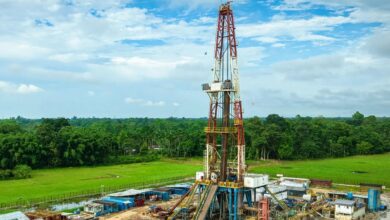
On the emerging plays side, the Haynesville Shale is hot. Devon has already drilled several vertical wells there and was in the process of drilling the first two horizontal wells. These wells will be “a different animal” than those in the Barnett or Marcellus shales, he noted. Haynesville wells tend to be deeper, with horizontal sections of 4,000 ft to 5,000 ft in depth, and some as deep as 13,000 to 14,000 ft TVD – which comes with very high treating and fracture initiation pressures.
“These are not easy wells to drill but have a very good capacity, and the successes seen by several companies to date warrant a lot more work there. That will come in a much more methodical way,” he said.
On the offshore side, Mr Mitchell pointed out that Devon is “one of the largest leaseholders in the Lower Tertiary trend in the ultra-deepwater Gulf of Mexico.” The company currently has the Seadrill West Sirius working on the development of the Cascade discovery, and the St. Malo, Jack and Kaskida projects are progressing as well.
Lower Tertiary is “the new frontier that we see in the Gulf of Mexico where Devon is putting a lot of our resources, but it’s not without its challenges,” he pointed out. They will require 15,000-20,000 psi production equipment, as well as subsea processing and subsea artificial lift.
Other completion/production technology issues include improvements for open-hole completion systems and stimulation technology; minimally erosive proppants; and economic water management cleanup systems.
On the drilling side, he cited the need for ruggedized and reliable MWD/LWD/RSS systems, better horizontal drilling systems, better drill bit/reamer designs to reduce stick-slip loading and reliability engineering.
“We’ll have to work with our drilling contractors and service providers to make this successful,” he said.