Halliburton launches low ECD solution to enhance reservoir access
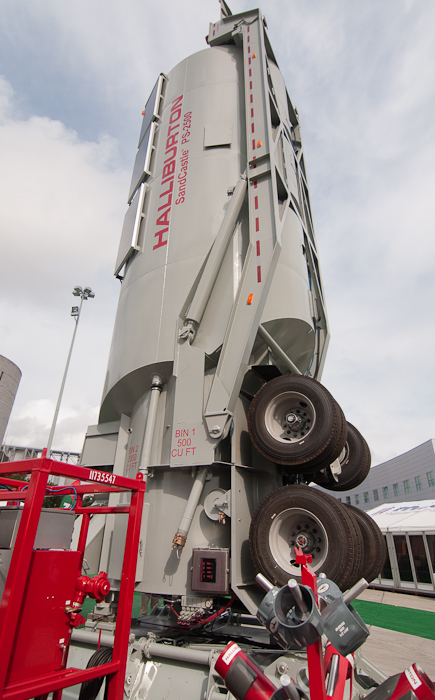
Halliburton unveiled today at the 2012 OTC a package of technologies aimed at helping operators access previously inaccessible reservoirs due to low equivalent circulating density (ECD) margins. The solution comprises new and existing technologies that enable operators to achieve more efficient operations and increase safety while managing cost.
“Wellbore integrity issues, including lost circulation, can account for a significant amount of nonproductive time,” said Chip Miller, vice president of Halliburton’s Baroid business line. “As operators drill more complex wellbores in difficult reservoirs, this low ECD solution uses an integrated-technology approach to address our customers’ ECD issues, increase efficiency, and maximize recovery.”
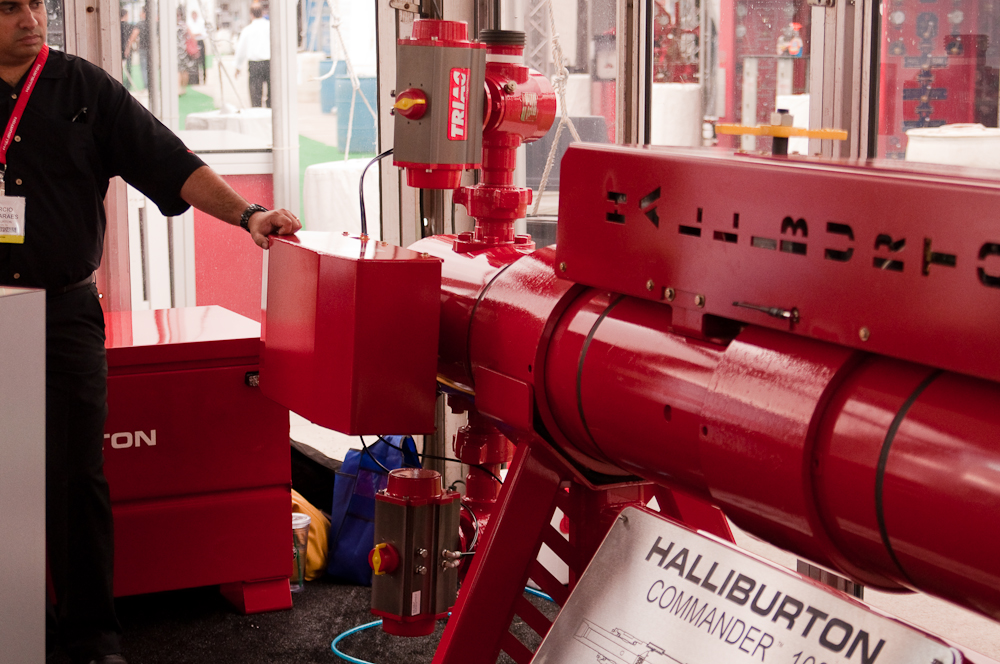
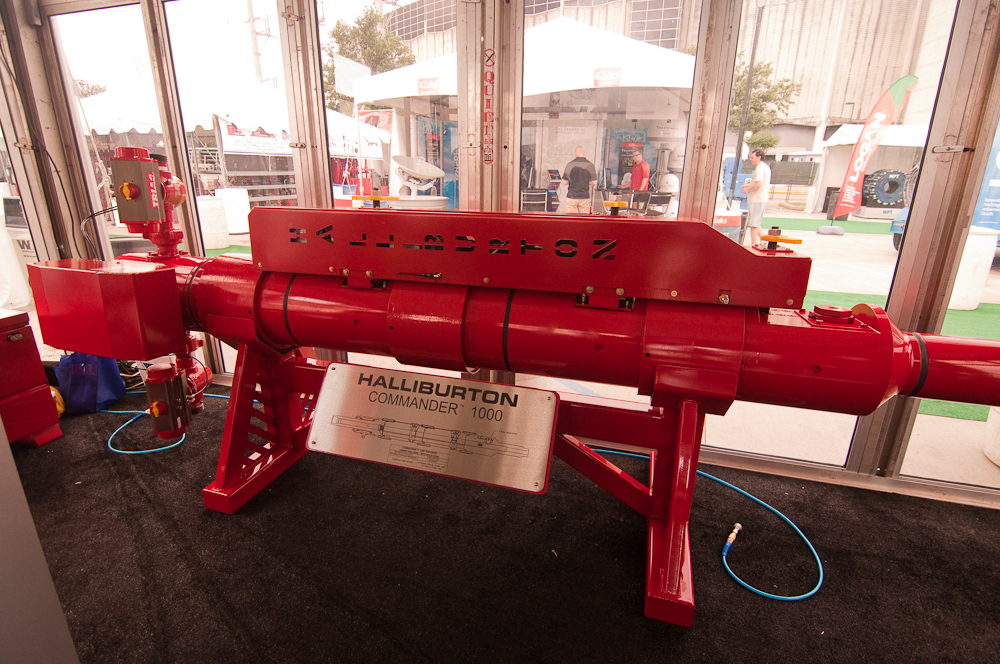
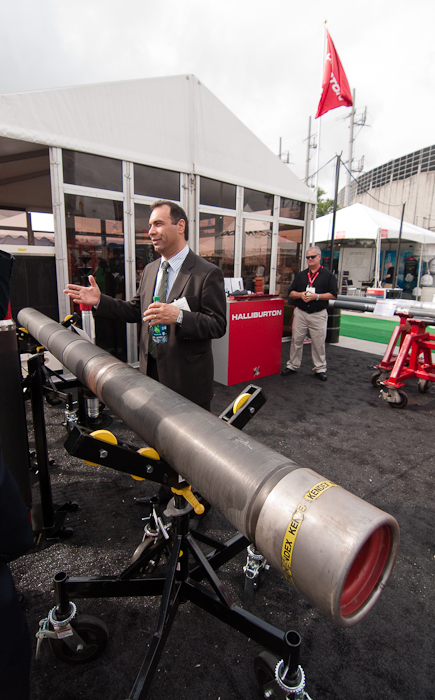
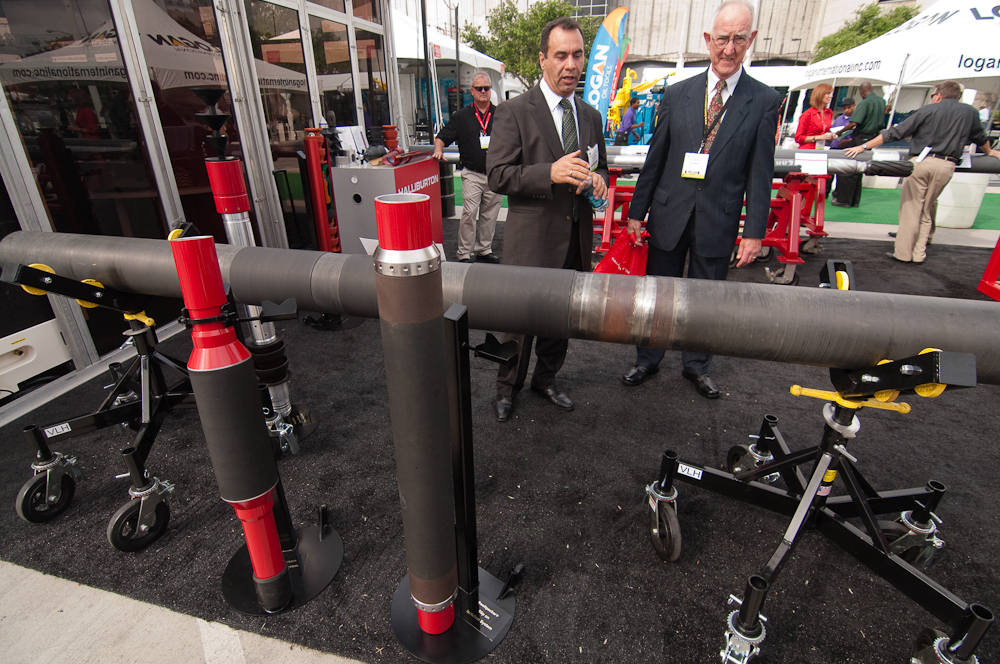
New technologies included in the package are the low ECD fluid enhancement package, VersaFlex low ECD system, Commander 1000 top-drive cementing head, and a high-pressure shearing unit. All work to narrow the window between the fracture gradient and pore pressure.
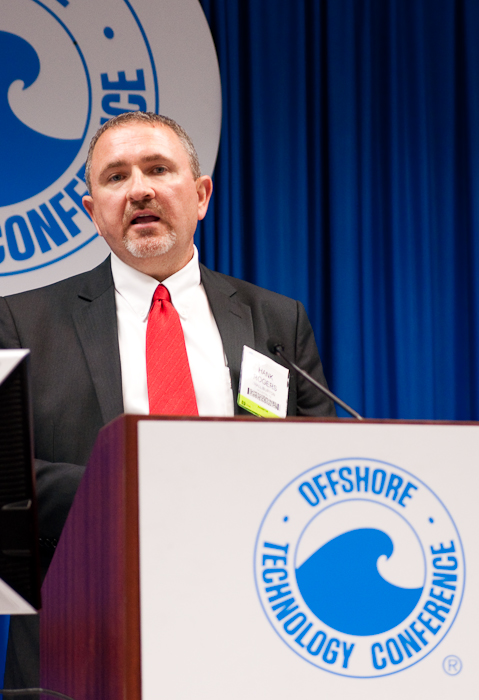
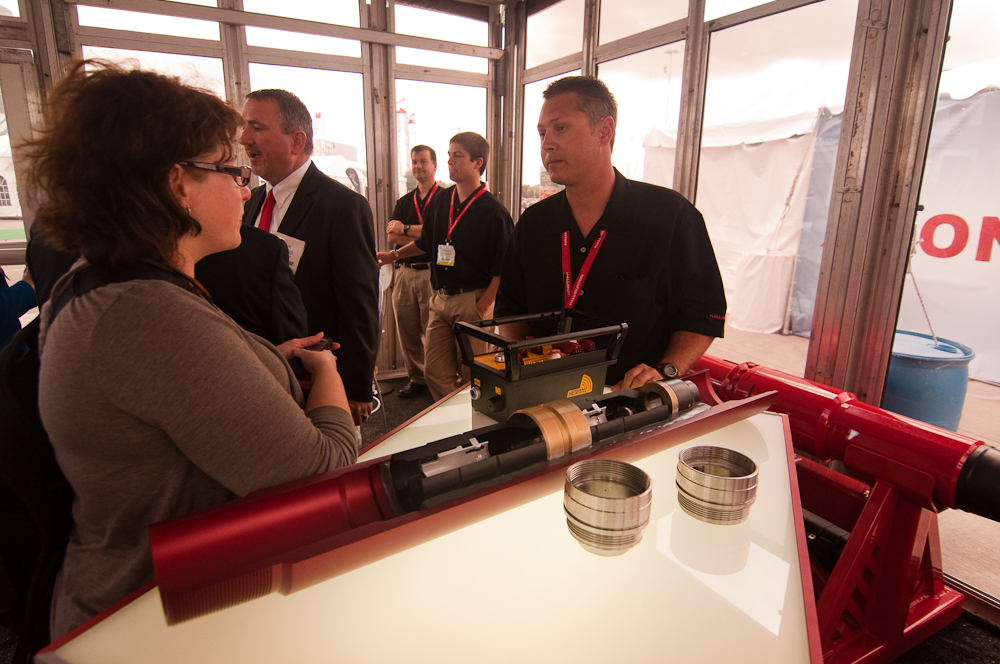
“With the Commander 1000 top-drive cement head, we simply look at how we can manage the pressure cycles that are exposed to the wellbore from the time we land the casing and start circulating in preparation for conditioning the well and cementing,” said Hank Rogers, global technical advisor for cementing casing equipment at Halliburton. “So, we designed a top-drive cement head that gives us the ability to dynamically launch parts for operating downhole tools. … By maintaining a consistent flow rate, it helps us to maintain a consistent pressure profile downhole.”
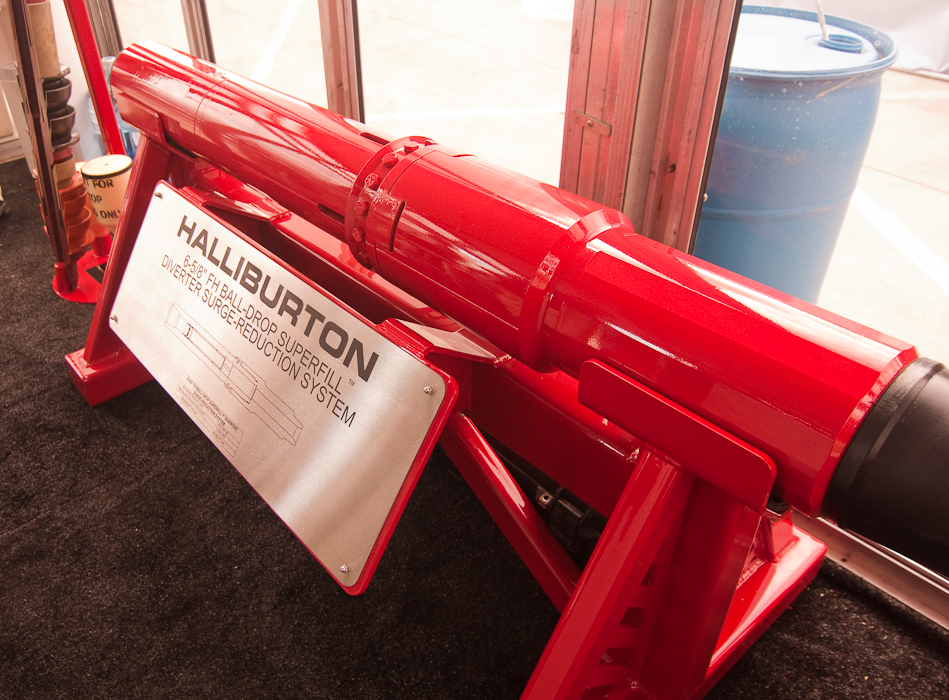
Existing technologies included in the solution are SuperFill surge reduction equipment, Protech CRB centralizer, iCem service and drilling fluids graphics software: fluid prediction and modeling services.
ECD occurs from increased bottomhole pressure caused by friction in the well from circulating drilling mud and fluids during cementing operations, which can create challenges in well integrity and safety. Halliburton believes that its low ECD solution addresses these challenges by:
• Maintaining hydrostatic pressure of the fluid column below the fracture gradient while maintaining well control;
• Reducing overall fluid viscosity to reduce frictional forces;
• Allowing drilling fluids, spacer and cement to flow freely into the casing and up the annulus to avoid lost circulation, while also providing excellent hole cleaning;
• Minimizing surge in the formation while running the liner so pressure drop across the hanger is reduced; and
• Increasing bypass circulation rate while not exceeding the fracture gradient of the formation due to pressure build-up.
VersaFlex, Commander, SuperFill, CRB, iCem, DFG are trademarks of Halliburton.